


Is Pain Management Right for You? | Pain Management in NJ | Core Medical & Wellness
Share this Post
Living with chronic pain changes everything. Simple tasks become monumental challenges. Sleep becomes elusive. The activities you once enjoyed feel like distant memories. If this sounds familiar, you’re not alone. More than 60 million Americans struggle with chronic pain, and that number continues to climb.
Pain management in NJ offers a specialized approach to treating persistent pain without necessarily resorting to surgery. At Core Medical & Wellness, we’ve helped thousands of patients across New Jersey reclaim their lives through targeted interventional therapies and personalized treatment plans.
But how do you know if pain management is right for you? This guide will help you understand when to seek specialized care, what interventional treatments can offer, and how our team across Closter, Lyndhurst, Kenilworth, Wyckoff, and Aberdeen can help you find lasting relief.
What Is Pain Management?
Pain management is a medical specialty focused on reducing pain and improving quality of life through evidence-based treatments. Unlike approaches that simply mask symptoms with medication, modern pain management targets the underlying source of your discomfort using advanced diagnostic techniques and minimally invasive procedures.
Pain management specialists are physicians with extensive training beyond medical school. Most complete fellowship training in interventional pain medicine, giving them expertise in both diagnosing the precise cause of pain and performing advanced procedures to treat it. This specialized knowledge allows them to offer treatment options that primary care physicians typically cannot provide.
Signs That Pain Management in NJ May Be Right for You
Not every ache or pain requires specialist intervention. However, certain signs indicate that your pain has progressed beyond what basic treatments can address.
Your Pain Has Lasted More Than Three Months
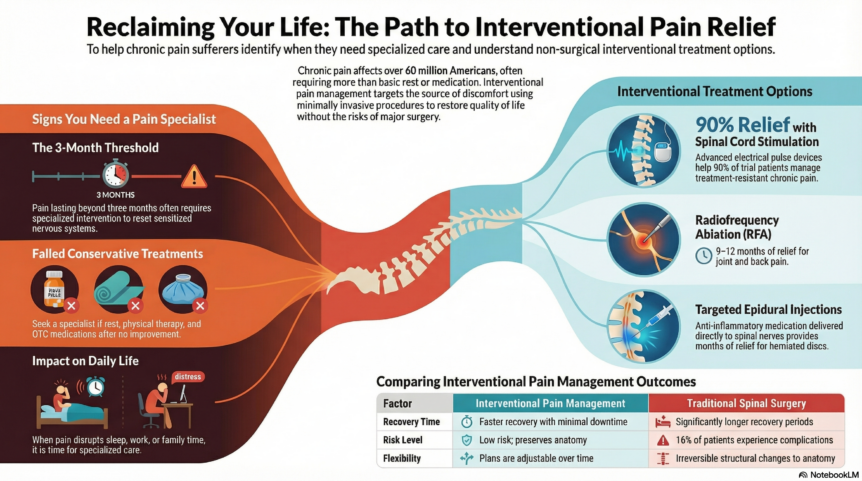
Acute pain serves a protective purpose during healing. Chronic pain, defined as pain persisting beyond three months, operates differently. At this point, your nervous system may have become sensitized, and the pain itself becomes the problem rather than merely a symptom. Specialized intervention can help reset these pain pathways.
Conservative Treatments Haven’t Worked
If you’ve tried rest, over-the-counter medications, ice, heat, and gentle exercises without meaningful improvement, your pain likely requires more targeted treatment. Pain management specialists have access to interventional procedures that can address pain at its source when basic approaches fall short.
Pain Interferes With Daily Life
When pain prevents you from working, sleeping, exercising, or spending time with family, it’s affecting far more than physical comfort. Pain management focuses not just on reducing discomfort but on restoring your ability to participate in the activities that matter most to you.
You’re Concerned About Long-Term Medication Use
Many patients come to us worried about depending on pain medications indefinitely. Modern pain management emphasizes multimodal approaches that minimize or eliminate the need for ongoing medication through targeted interventional procedures.
You Want to Avoid Surgery
Interventional pain management offers powerful alternatives to surgical intervention. Many patients who believed surgery was their only option discover that minimally invasive procedures can provide substantial, lasting relief while preserving surgical options for the future if needed.
Interventional Therapies: Targeted Treatment for Lasting Relief
Interventional pain management represents the cornerstone of modern pain treatment. These minimally invasive procedures target the specific structures generating your pain, offering substantial relief when other treatments prove inadequate.
Epidural Steroid Injections
Epidural injections deliver anti-inflammatory medication directly to the area surrounding compressed or irritated spinal nerves. Using fluoroscopic guidance for precision, these injections can provide significant relief for conditions including herniated discs, spinal stenosis, and radiculopathy. Success rates range from 40-87% depending on the specific condition, with many patients experiencing months of relief from a single treatment.
Radiofrequency Ablation
Radiofrequency ablation uses heat generated by radio waves to disrupt pain signals from specific nerves. This technique proves particularly effective for facet joint arthritis and chronic back or neck pain. Clinical studies show that 60% of patients maintain at least 90% pain relief at one year, with benefits often lasting 9-12 months or longer. The procedure can be safely repeated when needed.
Nerve Blocks
Nerve blocks involve precise injection of local anesthetic near specific nerves to interrupt pain transmission. These procedures serve both diagnostic and therapeutic purposes. When a diagnostic block provides immediate relief, it confirms that specific nerve or structure as the pain source, guiding subsequent treatment decisions. Therapeutic blocks often provide pain relief extending well beyond the duration of the local anesthetic.
Trigger Point Injections
Trigger points are tight bands of muscle that can cause localized pain and refer discomfort to other areas. Trigger point injections deliver medication directly into these problematic areas, relaxing the muscle and providing relief. This straightforward treatment often produces immediate improvement for patients with muscle-related pain.
Spinal Cord Stimulation
For severe, treatment-resistant pain, spinal cord stimulation offers an advanced solution. A small device delivers mild electrical pulses to the spinal cord, modulating pain signals before they reach the brain. This approach proves particularly effective for failed back surgery syndrome, complex regional pain syndrome, and peripheral neuropathy. Over 90% of trial patients experience sufficient relief to proceed with permanent implantation.
Regenerative Medicine
At Core Medical & Wellness, we embrace regenerative approaches that harness your body’s natural healing mechanisms. Platelet-rich plasma (PRP) therapy uses concentrated growth factors from your own blood to promote tissue repair in damaged joints, tendons, and ligaments. These treatments aim to restore tissue health rather than simply masking symptoms, potentially helping patients postpone or avoid surgical interventions.
What to Expect at Your First Pain Management Visit
Your initial consultation at Core Medical & Wellness involves a comprehensive evaluation lasting 30-60 minutes. We’ll review your complete medical history, examine your symptoms, and discuss your goals for treatment. Bring any imaging studies (MRI, CT scans, X-rays), a list of current medications, and notes about your pain patterns.
Based on this evaluation, we may recommend diagnostic procedures to pinpoint the exact source of your pain. These diagnostic steps are crucial for developing an effective treatment plan tailored specifically to your condition. We’ll explain all options, discuss risks and benefits, and work with you to determine the best path forward.
Pain Management vs. Surgery: Understanding Your Options
Surgery is rarely the first solution for chronic pain. Research shows that for many conditions, interventional pain management produces comparable outcomes with significantly lower risks. A comprehensive analysis of spinal fusion surgery found only minimal improvement compared to non-surgical treatment, while 16% of surgical patients experienced complications.
Pain management offers faster recovery times, fewer serious complications, and the ability to try multiple approaches over time. If a procedure doesn’t provide adequate relief, we can adjust your treatment plan. And because pain management preserves your anatomy, surgical options remain available in the future if needed.
That said, some conditions do require surgical intervention. When clear structural problems exist that can only be corrected surgically, we’ll tell you honestly. Our goal is finding the most effective path to relief, whether that involves interventional procedures, surgery, or a combination of approaches.
Pain Management Throughout New Jersey
Core Medical & Wellness provides comprehensive pain management services at five convenient locations across New Jersey. Whether you’re in Bergen County, Essex County, Union County, or Monmouth County, quality care is never far away.
Closter serves patients throughout northern Bergen County, including Demarest, Alpine, Norwood, and surrounding communities. Our Lyndhurst office provides convenient access for patients in southern Bergen County and nearby Essex County areas. Kenilworth offers pain management services to Union County residents and beyond. Wyckoff brings specialized care to central Bergen County. And our Aberdeen location extends our reach into Monmouth County, serving the Jersey Shore region.
Each location offers the same commitment to personalized, evidence-based pain management that has made Core Medical & Wellness a trusted name in New Jersey healthcare.
Taking the First Step Toward Relief
Chronic pain doesn’t have to define your life. If you’ve been living with persistent discomfort that limits your activities, disrupts your sleep, or diminishes your quality of life, pain management may offer the solution you’ve been seeking.
At Core Medical & Wellness, we believe every patient deserves a thorough evaluation and a treatment plan designed around their unique needs and goals. Our interventional approaches target pain at its source, offering meaningful relief with minimal downtime and risk.
Ready to explore your options for pain management in NJ? Contact Core Medical & Wellness today to schedule your consultation. With locations throughout New Jersey, expert care is closer than you think.
Frequently Asked Questions About Pain Management
How long does it take to see results from pain management treatments?
Results vary by treatment. Some interventional procedures like nerve blocks provide immediate relief, while others like radiofrequency ablation may take 1-2 weeks to reach full effect. Regenerative treatments often show gradual improvement over weeks to months as healing progresses.
Do I need a referral to see a pain management specialist?
Some insurance plans require referrals while others allow direct access to specialists. Our team can help verify your coverage and determine what documentation you’ll need for your visit.
Are interventional pain procedures covered by insurance?
Most interventional pain procedures are covered by major insurance plans, including Medicare. Coverage specifics depend on your plan and diagnosis. We work with patients to verify benefits and explain costs before any procedure.
What conditions do pain management specialists treat?
Pain management addresses a wide range of conditions including back pain, neck pain, sciatica, herniated discs, spinal stenosis, arthritis, neuropathy, complex regional pain syndrome, failed back surgery syndrome, and many other chronic pain conditions.