


Stiff Joints: Causes, Treatment & Relief | Pain Management Guide
Share this Post
Quick Answer: What Causes Stiff Joints?
Stiff joints most commonly result from osteoarthritis, inflammation, or inactivity. Morning stiffness lasting over 30 minutes may indicate inflammatory arthritis requiring medical evaluation. Most cases improve with movement, proper warm-up, and targeted treatments.
Table of Contents
Introduction: Understanding Joint Stiffness from a Pain Specialist’s Perspective
If you’ve ever struggled to get out of bed with creaky knees or needed several minutes to “loosen up” after sitting at your desk, you’re experiencing one of the most common complaints in pain management practices. As a board-certified pain management specialist, I see patients daily who struggle with joint stiffness—ranging from mild morning discomfort to debilitating limitation of movement.
📊 Key Statistic: Joint stiffness affects over 54 million adults in the United States alone, impacting quality of life, work productivity, and overall wellness.
Understanding the underlying mechanisms, recognizing warning signs, and knowing when to seek specialized care can make the difference between temporary discomfort and chronic disability.
What Are Stiff Joints? Medical Definition and Mechanism
Clinical Definition
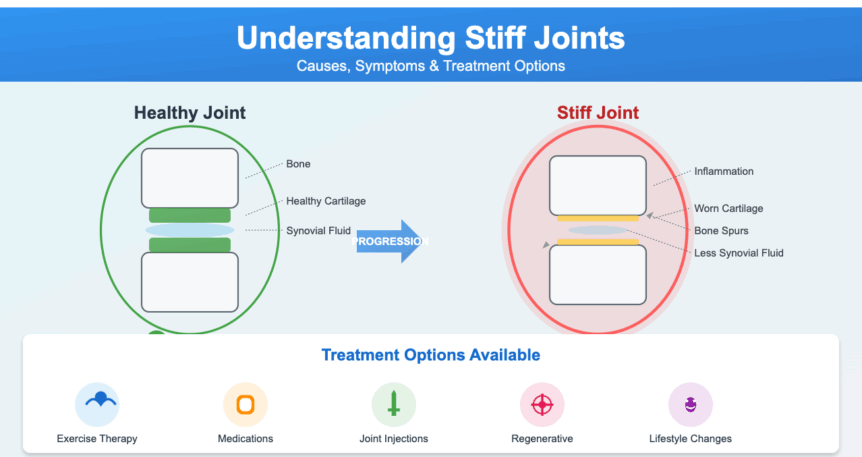
Joint stiffness, medically termed arthralgia with reduced range of motion, occurs when the synovial fluid in your joints becomes thicker or when inflammation reduces the joint space. This creates resistance to movement and the characteristic “stuck” feeling many patients describe.
Key Signs and Symptoms of Joint Stiffness
Primary Symptoms
- Difficulty initiating movement after periods of rest (gel phenomenon)
- Reduced range of motion compared to normal joint flexibility
- Morning stiffness lasting anywhere from minutes to hours
- Progressive loosening with gentle movement and activity
Warning Symptoms
- Visible swelling or joint deformity
- Warmth or redness around the joint
- Crepitus (grinding, clicking, or popping sounds)
- Pain that worsens with movement
- Systemic symptoms like fever or fatigue
7 Most Common Causes of Stiff Joints (From a Pain Management Perspective)
- Prevalence: Affects 32.5 million US adults
- Mechanism: Progressive cartilage breakdown leading to bone-on-bone contact
- Most affected joints: Knees (most common), hips, hands, spine
- Distinguishing feature: Stiffness improves within 30 minutes of movement
- Treatment approach: Multimodal pain management including injections, physical therapy, and regenerative medicine
- Prevalence: 1.3 million Americans affected
- Mechanism: Immune system attacks synovial membrane
- Pattern: Symmetrical joint involvement, often starting with small joints
- Morning stiffness: Typically lasts >60 minutes
- Red flag: Requires early intervention to prevent joint damage
When to See a Pain Management Specialist: Red Flags and Warning Signs
Immediate Evaluation Needed:
- ✓ Morning stiffness lasting more than 45 minutes
- ✓ Joint stiffness with fever or unexplained weight loss
- ✓ Multiple joints becoming stiff simultaneously
- ✓ Stiffness following recent infection or tick bite
- ✓ Sudden onset with severe pain and swelling
Schedule an Appointment If:
- Stiffness persists despite 2-3 weeks of home remedies
- Over-the-counter medications provide inadequate relief
- Stiffness interferes with work or daily activities
- You notice progressive worsening over time
- Family history of autoimmune arthritis
Evidence-Based Treatment Options: From Conservative to Advanced
First-Line Conservative Treatments
1. Movement and Exercise Therapy
- Low-impact activities: Swimming, water aerobics, cycling
- Flexibility programs: Yoga, tai chi, structured stretching
- Strength training: Isometric exercises to support joints
- Frequency: 150 minutes moderate activity weekly (CDC recommendation)
2. Thermal Modalities
- Heat therapy: 15-20 minutes before activity to improve flexibility
- Cold therapy: 10-15 minutes post-activity to reduce inflammation
- Contrast therapy: Alternating heat and cold for chronic stiffness
3. Lifestyle Modifications
- Weight management: 1 pound loss = 4 pounds less pressure on knees
- Ergonomic adjustments: Workplace and home modifications
- Sleep optimization: 7-9 hours for tissue repair
- Hydration: Minimum 64 oz daily for optimal synovial fluid
Medical Interventions
Oral Medications
- NSAIDs (with gastroprotection if long-term)
- Acetaminophen for mild symptoms
- Disease-modifying drugs for inflammatory arthritis
- Muscle relaxants for associated muscle tension
Topical Treatments
- Capsaicin cream (0.025-0.075%)
- Diclofenac gel for localized stiffness
- Compound creams with multiple active ingredients
Advanced Pain Management Procedures
Injection Therapies
- Corticosteroid injections
- Rapid relief lasting 3-6 months
- Maximum 3-4 per year per joint
- Viscosupplementation (Hyaluronic Acid)
- For knee osteoarthritis
- Series of 3-5 weekly injections
- Platelet-Rich Plasma (PRP)
- Regenerative approach
- Uses body’s healing factors
- Stem Cell Therapy
- Emerging treatment option
- Potential for cartilage regeneration
Prevention Strategies: A Proactive Approach
Daily Habits for Joint Health
- Morning routine: 5-10 minutes gentle stretching before getting out of bed
- Hourly movement: Stand and move for 2-3 minutes every hour
- Proper posture: Maintain neutral spine alignment
- Joint protection: Use larger, stronger joints for tasks
Nutritional Support
- Anti-inflammatory foods: Omega-3 fatty acids, colorful vegetables, berries
- Supplements to consider: Glucosamine/chondroitin, turmeric, vitamin D
- Foods to limit: Processed foods, excess sugar, saturated fats
Exercise Programming
- Warm-up: Always 5-10 minutes before exercise
- Cool-down: Include stretching post-activity
- Progressive loading: Gradual increase in intensity
- Cross-training: Vary activities to prevent overuse
Living with Joint Stiffness: Practical Daily Management Tips
Morning Routine Optimization
- Set alarm 15 minutes earlier for gentle wake-up stretches
- Take warm shower to loosen joints
- Perform range-of-motion exercises before weight-bearing
- Consider timing medications for morning relief
Workplace Modifications
- Ergonomic keyboard and mouse positioning
- Standing desk or desk converter
- Scheduled movement breaks with phone reminders
- Supportive seating with lumbar support
Sleep Environment
- Medium-firm mattress for spinal support
- Pillows to maintain joint alignment
- Room temperature 65-68°F to reduce inflammation
- Consider weighted blankets for pain relief
Frequently Asked Questions (FAQs)
Q: How long should morning stiffness last normally?
A: Normal morning stiffness should resolve within 15-30 minutes of movement. Stiffness lasting over 45 minutes suggests inflammatory arthritis requiring medical evaluation.
Q: Can weather really affect joint stiffness?
A: Yes, barometric pressure changes and cold temperatures can increase joint stiffness. Studies show 67% of arthritis patients report weather sensitivity.
Q: Are there specific supplements proven to help?
A: Evidence supports glucosamine/chondroitin for mild-moderate knee OA, omega-3 fatty acids for inflammation, and vitamin D for musculoskeletal health. Always consult your healthcare provider before starting supplements.
Q: When should I consider injections over oral medications?
A: Consider injections when oral medications cause side effects, provide inadequate relief, or when targeting specific joints. They offer localized treatment with minimal systemic effects.
Q: Can joint stiffness be completely cured?
A: While underlying conditions like osteoarthritis cannot be cured, symptoms can be effectively managed. Early intervention and comprehensive treatment can maintain joint function and quality of life.
Ready to Find Relief from Joint Stiffness?
Don’t let joint stiffness limit your life. Our team of pain management specialists is here to help you regain mobility and comfort.
Most insurance accepted • Same-week appointments available
Medical Disclaimer: This article is for informational purposes only and does not constitute medical advice. Always consult with a qualified healthcare provider for diagnosis and treatment of joint conditions. Individual results may vary, and treatment plans should be personalized based on your specific condition and medical history.