


The Most Common Treatments for Back Pain
Share this Post
If you suffer from back pain, you’re not alone. Between 20 and 25 percent of people who have missed 10 or more days from work have done so because of back pain. Sixteen million people in the US experience chronic back pain that limits their daily activities. And back pain costs over $12 billion per year in insurance and related costs.
What do most people do to feel better when they have back pain? Here are the most common treatments for back pain. You should know, though, that many of these treatments aren’t effective long-term or for all back problems. Also, several traditional treatments for back pain can actually be dangerous. The good news is that there are alternatives available today that weren’t around 10 or 20 years ago. When seeking relief from back pain, you definitely want to explore these options, as they are safer, more effective, and longer-lasting.
Common Back Pain Treatments
Ice and/or heat
For many injuries and overuse pain, ice and/or heat is the go-to. It’s easy to use at home and won’t usually make your condition worse. Ice reduces swelling, while heat soothes muscle tension and brings healing cells to the area once your swelling has gone down.
Back support
You may find giving your back better support helps. This is one treatment that you should probably continue even if other therapies provide relief, as it will prevent your back pain from returning and it’s good for your spine health.
Back support might be a better office chair, a lumbar cushion for the car when driving, or a wedge pillow behind you when you read in bed. You probably don’t need one of those back belts, however. There isn’t enough scientific evidence that they work, and they may make you think you can lift heavier weights than you should.
Improving posture and work ergonomics
If you are lifting heavy objects for work or a hobby, make sure your lifting technique is proper, using your legs to do the work, not your back. Try to avoid lifting and twisting at the same time, and never lift weight that requires straining.
Your posture is important too, whether you’re sitting at a desk all day or standing on your feet. Keep your shoulders back, your hips tucked slightly under, and your feet far enough apart for a good base of support. High heels make this difficult, so consider lower heels when standing or walking any distance.
Make sure your chair isn’t provoking back pain. Additionally, evaluate the ergonomics of your mouse, desk, and computer keyboard. Get up frequently if you sit all day, or consider a standing desk or desk that converts from sitting to standing.
Firmer mattress
If your mattress is too soft, your hips will sink in, pulling your spine out of alignment. Ideally, you want a mattress (and foundation or box spring) that’s somewhat firm beneath you, with only a small amount of cushioning above for comfort. Latex generally provides the best give without being too saggy, the way some pillowtop or foam mattresses are.
Complementary medicine
What used to be considered “fringe” treatments have now entered the mainstream. Back pain treatments that could be considered part of complementary medicine include:
-
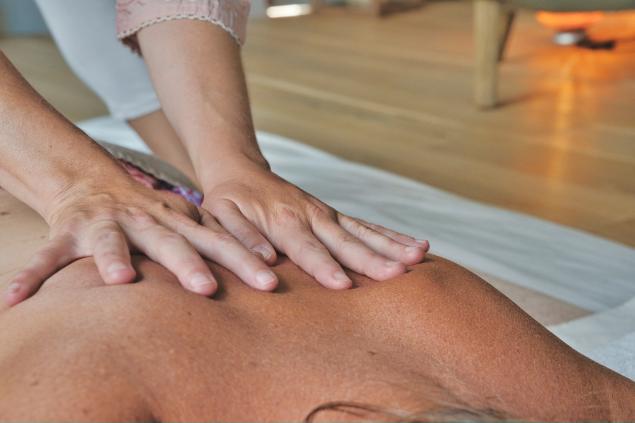
Massage
-
Yoga and tai chi
-
Chiropractic
-
Acupuncture
Even meditation could help with back pain if your pain is caused by stress and muscle tension.
Over-the-counter medications
Many people take drugstore pain medications, like naproxen or ibuprofen, to treat back pain, especially when it becomes chronic. However, just because these drugs are available without a prescription doesn’t mean they are harmless. Over-the-counter nonsteroidal anti-inflammatory drugs (NSAIDs) are associated with stomach irritation, increased acid reflux, high blood pressure, and elevated risk of cardiovascular events.
Prescription drugs
If you see a physician for chronic back pain, they may prescribe medication for you, but these drugs are often even more dangerous than their non-prescription counterparts. Anticonvulsants and antidepressants, for example, have a long list of undesirable side effects, some requiring other drugs for management. Opioid drugs are so sedating that most people can’t drive or work while taking them, and of course, we now know they are highly addictive.
Surgery
As a last resort, your doctor might recommend surgery for your back pain, particularly if you have degenerative disc disease or a herniated disc. But surgery can be expensive, even with insurance, and you need to plan for downtime to recover. Anesthesia carries with it the risk of serious complications or even death, and there are risks during the recovery period too, such as blood clots.
When it comes to back surgery, not every operation is successful. Some people get no relief from their back pain after all that, and a few find their pain is worse.
An Alternative to Conventional Treatments for Back Pain
Fortunately, regenerative medicine is a new back pain treatment option that is at the forefront of arthritis and sports injury management. At Core Medical & Wellness, we use regenerative medicine as part of a comprehensive plan to relieve back pain from multiple causes.
Our non-surgical spine and sports medicine team has a number of treatment modalities to reduce and eliminate pain. We provide electrical stimulation, local injections, nerve blocks, and physical therapy, among other treatments, to help relieve pain immediately. But for long-lasting results without surgery, nothing beats regenerative medicine.
We use bone marrow concentrate (BMC) and platelet-rich plasma (PRP) as our two primary regenerative medicine methods. These treatments utilize your own cells, injected into the back, to jump-start healing naturally. They reduce inflammation, encourage tissue growth, and alleviate pain and stiffness. Even better, these cells replicate themselves over and over, providing pain relief that lasts for months or years after treatment. Regenerative medicine gets to the root cause of your pain rather than simply masking it.
To find out if regenerative medicine is right for you, or if our other non-surgical options can help you manage back pain, a consultation with Core Medical & Wellness is all that’s required. We use your medical history, a physical exam, and medical imaging of your back to put together a treatment plan together with you. Call us at 888-521-0688 or reach out online today to schedule your first appointment and explore options that are safer and more effective than conventional medicine for your back pain.