


Creatine for Pain Management: What the Evidence Actually Shows
Share this Post
Creatine has a reputation problem. Most people picture a gym bag supplement — something for college athletes and competitive bodybuilders. But the science tells a different story. Creatine is one of the most studied compounds in sports medicine, and researchers have been building a quiet but compelling case for its role in chronic pain, fatigue-driven conditions, and rehabilitation medicine.
What Is Creatine and Why Does It Matter for Pain?
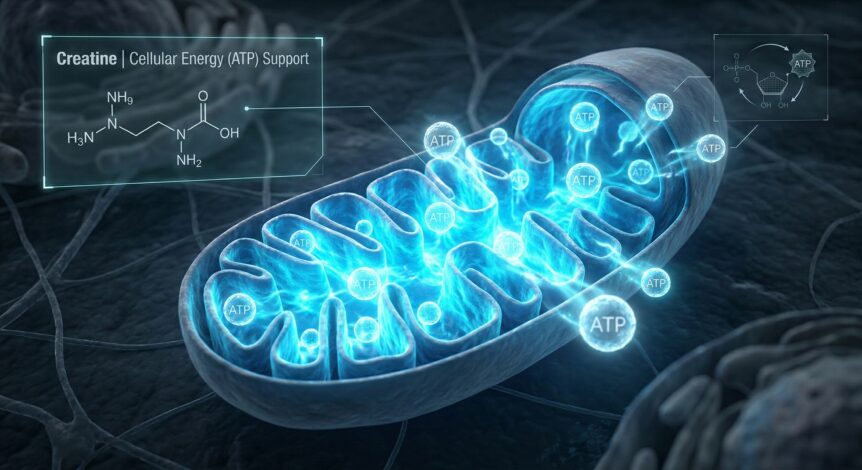
Your muscles and brain store creatine as phosphocreatine. When your body needs fast energy, phosphocreatine donates a phosphate group to replenish ATP — the fuel that powers every cellular process. Think of it as a rapid-recharge system for your cells.
When you supplement with creatine, you increase those phosphocreatine stores. That means more energy available under demand, faster recovery between bursts of effort, and better cellular resilience under stress.
Why does that matter for pain? Because many chronic pain conditions involve exactly the things creatine targets:
- Impaired cellular energy in muscle and nervous tissue
- Poor exercise tolerance and progressive deconditioning
- Chronic low-grade inflammation
- Mitochondrial dysfunction in affected tissues
Creatine does not block pain signals the way an opioid or NSAID does. It works upstream, supporting the biological environment that allows your tissues to function, heal, and respond to treatment. That is a meaningful distinction.
Creatine’s Anti-Inflammatory and Analgesic Potential
The anti-inflammatory data on creatine is more robust than most people realize. Lab studies show creatine can reduce endothelial permeability, lower neutrophil adhesion, and suppress the expression of inflammatory adhesion molecules like ICAM-1 and E-selectin — all markers of vascular and tissue inflammation.
Classic pharmacology research found creatine exhibited analgesic and anti-inflammatory activity in preclinical models, with effects in some ways comparable to non-steroidal anti-inflammatory drugs. Human data here remains limited, but the mechanisms are biologically plausible and consistent with what we know about creatine’s effects on cellular energy.
There is also a mitochondrial angle worth noting. When tissues are inflamed, cellular energy production is compromised. By boosting phosphocreatine availability, creatine may help stressed tissues maintain ATP levels and actively support repair, even under inflammatory conditions. For patients dealing with chronic pain conditions where tissue energy metabolism is already impaired, this matters.
The bottom line on inflammation: creatine is not a first-line anti-inflammatory drug, but it has real mechanisms that may dampen the inflammatory burden on already-stressed tissues when used as part of a comprehensive plan.
Creatine and Fibromyalgia: Real Clinical Data
Fibromyalgia is one of the most evidence-supported applications for creatine in pain medicine. Patients deal with widespread pain, severe fatigue, and limited exercise capacity — all of which are closely tied to cellular energy dysfunction in muscle tissue. That is exactly where creatine works.
A 16-week randomized, double-blind, placebo-controlled trial found that fibromyalgia patients who supplemented with creatine showed significant increases in intramuscular phosphocreatine and measurable improvements in both upper and lower body muscle function. Pain scores improved modestly, with the strongest gains on physical capacity and function.
A separate open-label study in 30 fibromyalgia patients tracked outcomes over eight weeks of creatine added to standard care. Patients reported improvements across overall disease severity, sleep quality, daily function, disability scores, and pain intensity. When creatine was discontinued, those benefits faded within four weeks, suggesting ongoing use is needed to sustain the results.
The practical takeaway for fibromyalgia patients is this: creatine helps you tolerate movement and exercise. And because graded physical activity is one of the most effective long-term treatments for fibromyalgia, anything that makes exercise more accessible and less exhausting is clinically significant.
Creatine and Joint Pain: Osteoarthritis and Rehab Recovery
Chronic joint pain and osteoarthritis are often driven by muscle weakness around the joint just as much as by cartilage damage itself. Weak periarticular muscles increase joint load, worsen mechanics, and accelerate wear over time. Rebuilding that supporting musculature is both treatment and prevention.
Creatine combined with resistance training consistently outperforms resistance training alone in studies involving older adults and individuals with knee osteoarthritis. Participants show greater gains in lean mass, lower-limb strength, and performance on functional tests like timed chair rises and walking speed assessments.
In post-surgical and post-injury rehabilitation, creatine has demonstrated the ability to:
- Preserve muscle mass during periods of immobilization and reduced activity
- Accelerate strength recovery in early rehabilitation phases
- Reduce perceived fatigue during physical therapy sessions
- Help patients progress through exercise protocols with less dropout from exertion
The pain relief in these populations is largely indirect. As strength improves, joint mechanics improve. As mechanics improve, load distribution normalizes. Less abnormal loading means less pain. That is a durable pathway to relief, not a temporary patch.
Who Is the Best Candidate for Creatine in a Pain Practice?
Creatine is not right for every patient, but it is a low-risk, high-value option for several common presentations we see at Core Medical & Wellness.
You may benefit from creatine supplementation if you have:
- Fibromyalgia or chronic widespread pain with significant fatigue and deconditioning
- Osteoarthritis or chronic joint pain while actively working through a strengthening program
- Post-orthopedic surgery or musculoskeletal injury requiring rehabilitation
- Chronic low back pain with significant muscle weakness as a contributing factor
- An active lifestyle with recurrent injuries — athletes, martial artists, and weekend warriors who also deal with persistent pain
Creatine also fits naturally alongside the procedures we perform. An epidural steroid injection, medial branch block, or joint injection can reduce nociceptive signaling and open a window for active rehabilitation. Creatine helps patients take full advantage of that window by making strength training more effective during the recovery phase.
Creatine Dosing and Safety: What You Need to Know
Creatine monohydrate is the most studied form available. It is also the most cost-effective. There is no compelling clinical evidence that more expensive formulations — creatine HCl, buffered creatine, or others — outperform plain monohydrate in real-world pain or rehabilitation populations.
Standard dosing protocol used in clinical studies:
- Loading phase: 20 grams per day divided into four doses for five to seven days (optional)
- Maintenance phase: 3 to 5 grams per day ongoing
In a pain management context, many clinicians skip loading entirely. Starting at 3 to 5 grams per day avoids the initial bloating and GI discomfort some patients notice during a loading phase. Full muscle saturation is achieved within three to four weeks on maintenance dosing alone, with no meaningful difference in long-term outcome.
What about kidney safety?
This is the most common concern, and it deserves a direct answer. A recent systematic review and meta-analysis found that creatine supplementation is associated with a modest, transient rise in serum creatinine, but no significant change in measured or estimated kidney filtration rate. In people with normal renal function, standard doses are well tolerated across multiple clinical populations.
Patients with pre-existing chronic kidney disease, significant nephrotoxic medication use, or poorly controlled hypertension or diabetes should discuss creatine with their physician before starting. For everyone else, a baseline kidney function check and periodic monitoring provides appropriate oversight without unnecessary restriction.
One practical note: creatine draws water into muscle cells. Staying consistently well-hydrated supports both performance and kidney safety.
How Creatine Fits Into a Multimodal Pain Management Plan
Creatine works best when it is part of a larger strategy, not a standalone intervention. That philosophy aligns with how we practice at Core Medical & Wellness.
Our approach starts with understanding what is actually driving your pain. Is it nociceptive, neuropathic, or centrally sensitized? What role does muscle weakness, poor conditioning, sleep disruption, or systemic inflammation play? Creatine addresses several of those contributing factors at once, which makes it a practical fit in a thoughtfully designed plan.
In a well-built multimodal plan, creatine pairs naturally with:
- Progressive resistance training and structured exercise programs
- Blood flow restriction training for patients who cannot tolerate heavy loads early in recovery
- Interventional procedures that reduce pain and create an active rehabilitation window
- Sleep optimization and anti-inflammatory nutritional strategies
- Evidence-based supplements, regenerative medicine approaches, and, where appropriate, peptide therapies
When we describe creatine to patients, we frame it as cellular energy support. It does not replace your treatment plan. It makes your treatment plan work better by helping your muscles respond, recover, and rebuild from every effort you put in.
Frequently Asked Questions About Creatine and Pain
Can creatine help with chronic pain?
Creatine shows real clinical promise in chronic pain, particularly where fatigue, deconditioning, and impaired muscle function are part of the picture. It works primarily by improving cellular energy and exercise capacity, which reduces pain by addressing underlying physical contributors rather than masking symptoms.
Is creatine safe if I have kidney concerns?
For people with normal kidney function, creatine at standard doses is well supported by the available safety data. It may slightly raise serum creatinine — a muscle metabolism marker, not a sign of kidney damage — but kidney filtration rates remain unchanged in healthy individuals. If you have known kidney disease, speak with your physician before starting.
What is the best creatine dose for pain management?
A maintenance dose of 3 to 5 grams per day of creatine monohydrate is the standard supported by clinical research. In a pain management context, most physicians skip the loading phase for simplicity and tolerability. Full muscle saturation is reached within a few weeks on maintenance dosing alone.
Does creatine reduce inflammation?
Preclinical data suggests yes. Creatine can reduce inflammatory adhesion molecules and endothelial permeability in lab models. Clinical human data is still developing, but the mechanisms are biologically grounded. The effect in humans appears modest and largely indirect, working through improved cellular energy rather than direct cytokine suppression.
The Bottom Line on Creatine for Pain Management
Creatine is not a painkiller. It will not replace a targeted nerve block, a well-designed physical therapy program, or a regenerative procedure for the right candidate. But it is an evidence-informed supplement with a strong safety profile, meaningful clinical data in fibromyalgia and rehabilitation populations, and a biological rationale that fits how we think about pain at Core Medical & Wellness.
If you are dealing with chronic pain, struggling to make real progress in physical therapy, or looking for intelligent adjuncts to your current treatment plan, creatine is worth a conversation.
Core Medical & Wellness specializes in non-surgical pain management across New Jersey, with locations in Lyndhurst, Closter, Wyckoff, Aberdeen, and Kenilworth. We take the time to understand your individual pain drivers and build a plan that addresses them directly. Contact us today to schedule a consultation.