

Hyperbaric Oxygen Therapy for Pain & Longevity
Share this Post
If you live with chronic pain—or you’re looking for science-backed ways to age better—you may have heard about hyperbaric oxygen therapy. Also called HBOT, this treatment is gaining real traction in both pain management and longevity medicine. But how much of what you hear is backed by evidence?
In this guide, we break down what HBOT is, how it works, and what the research says about using it for conditions like fibromyalgia, complex regional pain syndrome (CRPS), and healthy aging. We also cover what it cannot do—so you can make an informed decision.
What Is Hyperbaric Oxygen Therapy?
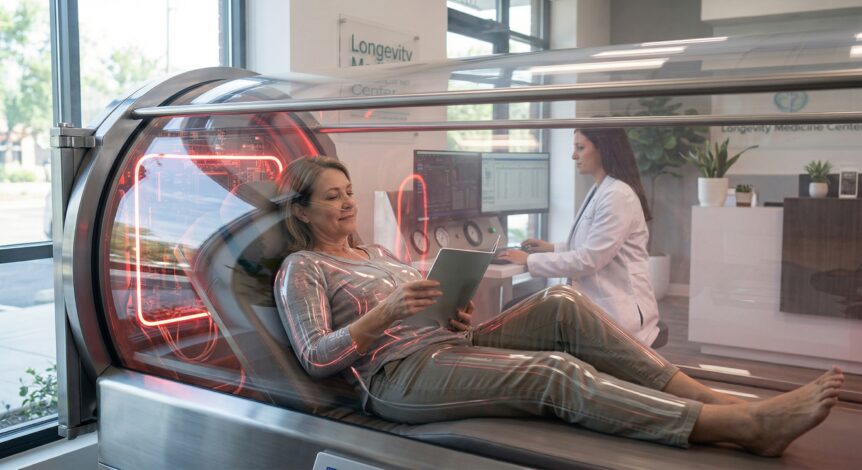
During an HBOT session, you sit or lie inside a pressurized chamber and breathe 100% pure oxygen. The pressure inside the chamber is typically set between 2.0 and 2.5 ATA (atmospheres absolute)—about twice the normal air pressure at sea level. Each session usually lasts around 90 minutes.
Under this extra pressure, your blood can carry far more dissolved oxygen than it normally does. As a result, oxygen reaches areas of your body that may be starved for it—such as damaged tissues, inflamed nerves, or underperforming regions of the brain.
Doctors have used HBOT for decades to treat well-established conditions, including decompression sickness, carbon monoxide poisoning, bone infections, radiation tissue damage, and diabetic foot wounds. These are the uses most insurance plans currently cover.
How Does HBOT Help With Chronic Pain?
HBOT is not a painkiller. It does not simply mask your symptoms the way a pill might. Instead, it works by changing conditions inside your body at a cellular level. Here is what researchers believe is happening:
- It reduces inflammation. HBOT lowers levels of inflammatory chemicals that play a big role in chronic pain.
- It improves blood flow. The extra oxygen signals your body to grow new, tiny blood vessels—a process called angiogenesis. Better blood flow means more healing.
- It supports nerve repair. Studies suggest HBOT may help the brain and nervous system rewire themselves through neuroplasticity. This matters most in conditions where the brain processes pain signals incorrectly.
- It helps tissues heal. More oxygen supports collagen production, fights infection, and speeds wound repair.
In other words, HBOT targets many of the root causes of chronic pain—rather than just turning down the volume on pain signals.
HBOT for Fibromyalgia: The Strongest Pain Evidence
Fibromyalgia causes widespread body pain, deep fatigue, brain fog, and poor sleep. Standard medications such as pregabalin and duloxetine help some patients, but many continue to struggle. This is where HBOT has shown some of its most promising results.
What the Studies Found
Multiple controlled trials have tested HBOT for fibromyalgia. In one important study, patients who received HBOT had significantly greater pain reduction than those treated with medications alone. Researchers described the effect size as large and clinically meaningful.
Beyond pain scores, patients in the HBOT groups also reported better sleep, improved daily function, and higher overall quality of life. Brain imaging even showed increased activity in regions tied to executive function and emotional processing—suggesting real, objective changes in how the brain handles pain.
The results were especially strong in patients whose fibromyalgia developed after a traumatic brain injury (TBI). Researchers believe HBOT directly addresses the brain-level changes that drive central sensitization—the process that makes your nervous system overreact to pain.
What Protocol Was Used?
The studies that showed real benefits used specific, medical-grade protocols—not low-pressure consumer units:
- 40 to 60 sessions, 5 days per week
- 90 minutes per session at approximately 2.0 ATA
- Hard-shell, medical-grade hyperbaric chamber with clinical supervision
This is a key point: consumer-grade soft chambers operating at low pressure have not been shown to produce these results. If you are considering HBOT for fibromyalgia, the type of chamber matters.
HBOT for Complex Regional Pain Syndrome (CRPS)
CRPS is another notoriously difficult condition to treat. It typically starts after an injury or surgery and causes intense, burning pain that is out of proportion to the original problem. Swelling, skin changes, and extreme sensitivity to touch are common.
What the Research Shows
The evidence for HBOT for chronic pain from CRPS is smaller than for fibromyalgia, but still encouraging. A randomized, double-blind, sham-controlled trial tested 15 sessions at 2.4 ATA in patients with CRPS of the wrist. The HBOT group experienced greater pain reduction compared to the control group.
Additional case series report meaningful drops in pain scores and improved function after 15 to 30 sessions. No major side effects were reported in any of these studies.
Because CRPS involves microvascular dysfunction, tissue oxygen starvation, and nerve inflammation, it is a logical target for HBOT. Consequently, it can serve as a reasonable add-on treatment once standard therapies—nerve blocks, medications, physical therapy, and desensitization—have reached a plateau.
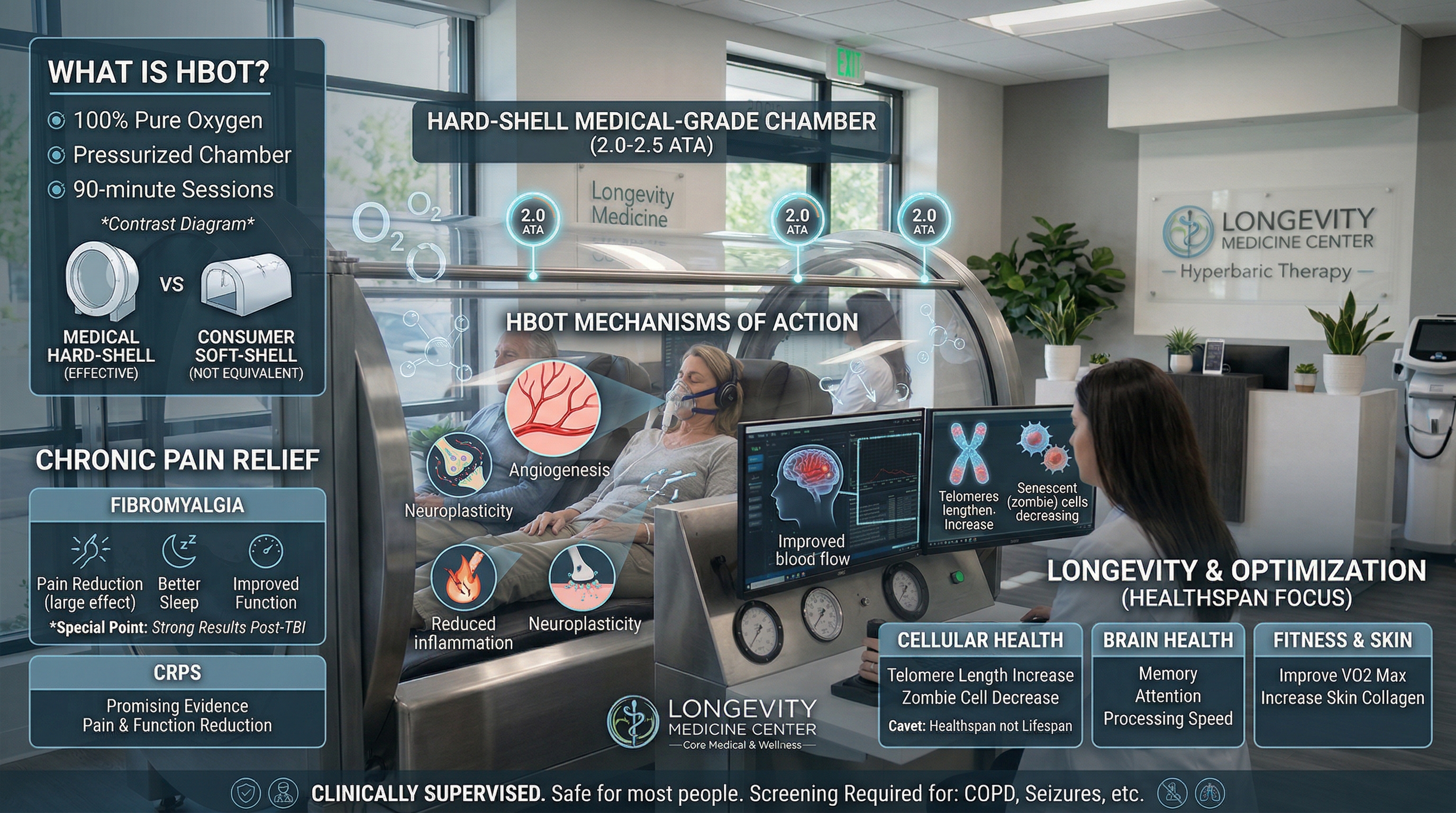
HBOT works through multiple mechanisms — from reducing inflammation and growing new blood vessels to supporting brain health and cellular markers of aging.
Hyperbaric Oxygen Therapy and Longevity: What We Know So Far
Beyond pain, hyperbaric oxygen therapy longevity research has generated significant interest. Here is a look at the most talked-about findings.
Telomere Length and Senescent Cells
Telomeres are protective caps on the ends of your chromosomes. They shorten as you age, and shorter telomeres are linked to age-related diseases. A closely watched study found that about 60 HBOT sessions led to measurable increases in telomere length in the immune cells of older adults. The same study showed decreases in senescent (or “zombie”) cells—old, damaged cells that fuel chronic inflammation.
These findings are exciting, but they come with an important caveat: longer telomeres do not automatically mean you will live longer. They are a biological marker of cellular health—not a guarantee of extra years.
Brain Health and Cognitive Function
The same research protocols showed modest but measurable improvements in global cognitive function—including memory, attention, and processing speed—in older adults. Brain blood flow improved as well. For people concerned about age-related cognitive decline, this is one of the more compelling findings to date.
Fitness and Skin Health
Some studies also reported improvements in VO2 max (cardiorespiratory fitness) and increased skin collagen density after extended HBOT courses. While these are early results from small studies, they align well with a healthspan framework—living better, not just longer.
What HBOT Cannot Do
To set expectations clearly, here is what the evidence does not support:
- It is not a proven life-extension treatment. No study has shown that HBOT makes people live longer. The benefits lie in health markers and daily function.
- Soft-shell home chambers are not equivalent. Research uses hard-shell chambers at 2.0 ATA or higher. Low-pressure consumer units have not been shown to reproduce these results.
- It is not a cure-all. HBOT works best for specific conditions where inflammation, poor blood flow, and nerve dysfunction are driving the problem.
Is Hyperbaric Oxygen Therapy Safe?
For most people, HBOT is safe when performed in a supervised medical setting. The most common side effects are mild ear discomfort (similar to what you feel on an airplane), temporary changes in vision, and fatigue after sessions.
Serious complications are rare. However, your doctor should screen you for certain conditions before treatment, including:
- Untreated collapsed lung (pneumothorax)
- Severe COPD with air trapping
- Uncontrolled seizure disorders
- Certain ear or sinus conditions
- Current use of certain chemotherapy drugs such as bleomycin or doxorubicin
Frequently Asked Questions About HBOT
How many HBOT sessions do I need for chronic pain?
Most research protocols for fibromyalgia use 40 to 60 sessions at about 2.0 ATA, five days per week. For CRPS, studies have used 15 to 30 sessions at 2.0 to 2.4 ATA. Your doctor will recommend a course based on your specific condition and response.
Does insurance cover hyperbaric oxygen therapy?
Insurance typically covers HBOT for specific, approved diagnoses such as diabetic foot wounds, radiation injury, bone infections, and decompression sickness. Coverage for fibromyalgia, CRPS, or longevity purposes is not standard. Check with your insurance provider and ask about prior authorization.
What is the difference between a hard-shell and a soft-shell hyperbaric chamber?
Hard-shell chambers are medical-grade and can reach pressures of 2.0 ATA or higher with 100% oxygen. Soft-shell chambers typically operate at 1.3 to 1.5 ATA and use ambient air or oxygen concentrators. The research supporting pain and longevity benefits was conducted in hard-shell chambers under clinical supervision.
Can HBOT reverse aging?
HBOT has been shown to improve certain biological markers associated with aging, such as telomere length and inflammatory markers. However, no study has proven that HBOT extends lifespan. It is more accurate to say that HBOT may support healthspan—helping you feel and function better as you age.
What are the side effects of hyperbaric oxygen therapy?
The most common side effects are mild ear pressure, temporary nearsightedness, and fatigue. Serious but rare risks include oxygen toxicity seizures and lung barotrauma. These risks are minimized when HBOT is done in a supervised, medical-grade facility.
How We Can Help at Core Medical & Wellness
At Core Medical & Wellness, we take an evidence-based approach to every treatment we offer. If you are considering hyperbaric oxygen therapy, we can help you determine whether it fits your situation and goals.
We may recommend HBOT as part of a broader plan for patients with:
- Refractory fibromyalgia or central sensitization, especially after traumatic brain injury, when standard medications have not been enough.
- Complex regional pain syndrome (CRPS) that has plateaued despite nerve blocks, medications, and physical therapy.
- Pain related to radiation injury or chronic wounds, where HBOT already has strong evidence for tissue healing.
- Longevity and optimization programs, combined with structured exercise, metabolic health, hormone optimization, and stress management.
Our goal is simple: help you hurt less, think more clearly, and feel better in your body—using treatments backed by real evidence.
If you are living with chronic pain or exploring options for healthy aging, we are here for you. Contact us today to find out if HBOT could be the right addition to your care plan.
Medical Disclaimer: This article is for educational and informational purposes only. It is not medical advice, diagnosis, or treatment. Hyperbaric oxygen therapy should only be done under the care of a licensed healthcare provider. Always talk to your doctor before starting any new treatment. If you think you are having a medical emergency, call 911 right away.