


NAD+ for Chronic Pain | What You Need to Know
Share this Post
What Is NAD+ and Why Does It Matter for Pain?
Your body runs on energy. Every cell needs fuel to work, heal, and stay healthy. NAD+ is a molecule that helps make that fuel. Its full name is nicotinamide adenine dinucleotide. You do not need to remember that. Just know this: without enough NAD+, your cells struggle.
NAD+ plays a big role in how your body handles inflammation, repairs damaged nerves, and keeps tissues healthy. When NAD+ levels drop, pain can get worse. Energy goes down. Healing slows. This matters a lot if you live with chronic pain.
Research now shows that NAD+ is closely tied to pain pathways in your body. That has opened the door to a new question: can boosting NAD+ levels help people who deal with ongoing pain?
How NAD+ Connects to Chronic Pain
Chronic pain is complex. It involves your nerves, your immune system, and the energy factories inside your cells called mitochondria. NAD+ sits right at the center of all three.
It Powers Your Cells
NAD+ helps mitochondria produce ATP. ATP is the energy currency your cells use. When mitochondria do not work well, cells get stressed. That stress can make nerves more sensitive to pain. Low cellular energy is now linked to conditions like neuropathy and central sensitization.
It Calms Inflammation
NAD+ activates proteins called sirtuins. Sirtuins act like switches that turn down inflammation. They block a key pathway called NF-kB. That pathway drives the release of chemicals that cause swelling, redness, and pain. More NAD+ means more sirtuin activity. That means less inflammation at the cellular level.
It Protects Your Nerves
When nerves get injured, certain enzymes use up NAD+ very quickly. This drains the supply your nerves need to survive and repair. If NAD+ drops too low, nerves can break down. That breakdown is a major driver of neuropathic pain. Keeping NAD+ levels above a critical threshold helps protect nerve fibers and may slow or prevent further damage.
What Does the Research Say?
Most of the evidence so far comes from lab studies and animal models. Large human trials focused on pain are still limited. But the early findings are promising.
Neuropathic Pain
In chemotherapy-induced neuropathy models, researchers found that activating the NAD+ salvage pathway protected nerves in the sciatic nerve and paw tissue. Pain behavior improved. The approach even outperformed some other strategies like PARP inhibition. Other studies on nerve injury show that maintaining NAD+ levels reduces inflammatory chemicals, protects axons, and limits nerve degeneration.
Fibromyalgia and Chronic Fatigue
Some clinical reports describe improvements in pain, fatigue, and brain fog after NAD+ infusions in people with fibromyalgia. A small trial in chronic fatigue syndrome found modest improvements in a body pain score when participants took NADH supplements. The overall results were mixed. But the idea makes sense. If your pain involves an energy deficit, boosting the molecule that drives energy production could help.
Joint Pain and Arthritis
NAD+ supports the health of cartilage and synovial tissue. It reduces oxidative damage. Through sirtuins, it dials down the inflammatory signals that break down joints over time. Some regenerative medicine experts believe NAD+ may work well alongside treatments like PRP injections and stem cell therapies. Together, they address both the metabolic and structural sides of joint disease.
How Can You Boost NAD+ Levels?
There are two main approaches people use today. Each has pros and cons.
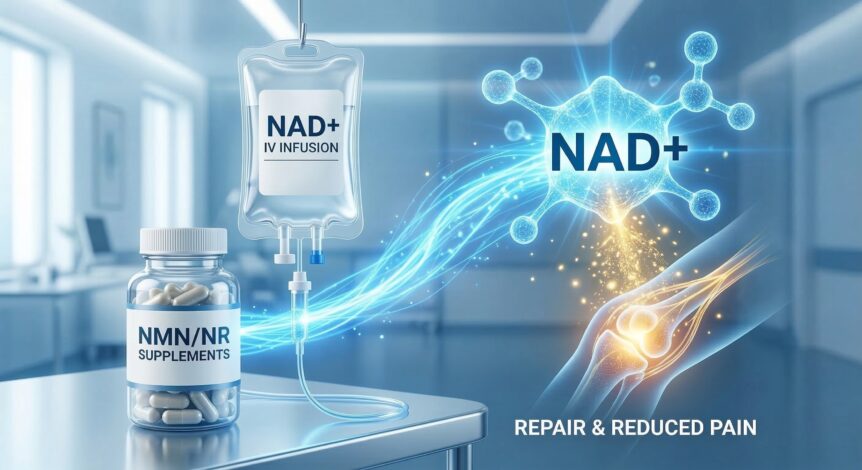
Oral Supplements: NR and NMN
Nicotinamide riboside (NR) and nicotinamide mononucleotide (NMN) are the two most studied oral NAD+ precursors. Your body converts them into NAD+. Human trials show that NR safely raises NAD+ levels and reduces inflammatory markers in healthy people and in certain patient groups.
No large trial has yet proven a clear pain-relief benefit from NR or NMN alone. But their safety profile is strong. Their anti-inflammatory effects are real. Many practitioners now use them as part of a broader wellness and longevity plan.
IV NAD+ Therapy
Some clinics offer NAD+ through intravenous infusions . This delivers the molecule directly into your bloodstream. Patients often report reduced pain, better energy, improved mood, and sharper mental clarity.
These reports are encouraging. But we have to be upfront. Standardized dosing protocols do not exist yet. Large controlled trials for pain are lacking. The benefits people describe are consistent with what you would expect from reducing inflammation and improving mitochondrial function. But we need more rigorous data before calling IV NAD+ a proven pain treatment.

NAD+ therapy supports nerve health and cellular repair, helping reduce chronic pain and restore quality of life.
Who Might Benefit Most?
NAD+ is not a standalone pain treatment. It works best as part of a comprehensive plan. That said, certain people may see the most value.
You may be a good candidate if you have peripheral neuropathy from diabetes, chemotherapy, or surgery. You may also benefit if you deal with fibromyalgia or chronic fatigue where energy and mitochondrial health are part of the picture. People with degenerative joint disease who are already doing regenerative therapies could use NAD+ as metabolic support. Athletes and active adults recovering from injury may also find value in its nerve-protective and anti-inflammatory effects.
The best results come when NAD+ is layered on top of evidence-based treatments. That means proper pain management, exercise, sleep optimization, and nutrition should already be in place.
What You Should Know Before Trying NAD+
Here are a few things to keep in mind.
NAD+ therapy is still investigational for pain. The science behind it is strong. The mechanisms make sense. But we do not yet have the large clinical trials that would make it a standard recommendation. Think of it as a promising tool in the longevity and metabolic health space that may have real benefits for pain.
Cost matters. IV infusions take time and money. Oral supplements are more accessible but may not raise NAD+ as dramatically. Work with a provider who understands the evidence, sets realistic expectations, and monitors your progress.
Not every pain condition will respond. NAD+ is most relevant where inflammation, mitochondrial dysfunction, or nerve damage play a clear role. If your pain is primarily structural, like a herniated disc pressing on a nerve, you still need targeted interventions to address the root cause.
The Bottom Line
NAD+ is one of the most exciting areas in pain research right now. It sits at the crossroads of energy production, inflammation control, and nerve protection. Early evidence and clinical experience suggest real potential for people with chronic pain, especially neuropathy, fibromyalgia, and degenerative joint conditions.
We are not at the point where NAD+ replaces proven treatments. But as an adjunct, it fits naturally into a regenerative, longevity-focused approach to pain care. The science is moving fast. And for patients looking for every possible edge in their recovery, NAD+ deserves a serious look.
If you want to learn whether NAD+ therapy might help your pain, schedule a consultation at Core Medical & Wellness. We take a whole-person approach and stay on the leading edge of what works.
Frequently Asked Questions About NAD+ and Pain
What is NAD+ used for in pain management?
NAD+ supports cellular energy, reduces inflammation, and protects nerve tissue. In pain management, it is used as an adjunct to help conditions like neuropathy, fibromyalgia, and degenerative joint pain where these factors play a role.
Is NAD+ IV therapy proven to treat chronic pain?
Not yet. The science behind NAD+ and pain is strong, but large clinical trials are still needed. Many patients report benefits, and the mechanisms are well supported. It is best described as investigational with a solid rationale.
What is the difference between NR, NMN, and IV NAD+?
NR and NMN are oral supplements your body converts into NAD+. IV NAD+ delivers the molecule directly into your bloodstream for a more immediate effect. Each has trade-offs in cost, convenience, and how much they raise your NAD+ levels.
Are there side effects of NAD+ therapy?
Oral NAD+ precursors like NR have a strong safety record in human trials. IV NAD+ can cause temporary flushing, nausea, or chest tightness during infusion. These effects are usually mild and resolve quickly.
Can NAD+ help with neuropathy?
Preclinical studies show that maintaining NAD+ levels protects nerves and reduces neuropathic pain. This applies to chemotherapy-induced neuropathy, diabetic neuropathy, and nerve injury models. Human data is still limited but promising.